-2.png?width=132&height=32&name=slatecx-logo%20(1)-2.png)

The 2026 B2B GenAI Investment Report.
Why 79% of companies are adopting AI SDRs but only 5% find them highly effective. A survey of 205 B2B leaders on the growing disconnect between marketing automation and what buyers actually want.
Six numbers that explain B2B in 2026.
Companies are automating more. Buyers are engaging less.
In 2026, B2B marketing and sales leaders are facing a stark contradiction. Despite significant investments in AI-powered tools designed to accelerate sales, buyer engagement is declining, and acquisition costs are soaring. This report, based on a survey of over 200 B2B leaders, uncovers a new paradox: as companies automate more of the sales process, they are inadvertently pushing buyers away.
We found that while 79% of B2B organizations are using or planning to use AI Sales Development Representatives (SDRs), a staggering 90% describe them as limited, poorly integrated, or aggressive — and only 5% find them highly effective.
Meanwhile, buyers are retreating. Over 69% report significant friction in the research process, and 68% are responding less to vendor outreach. They are abandoning traditional vendor websites in favor of AI-powered research platforms like ChatGPT and Gemini, which now represent the primary starting point for 41% of B2B buyers.
This report unpacks the data behind the disconnect, identifies the root causes, and provides a strategic framework for aligning with the modern buyer journey.
Are B2B marketing jobs at risk as lead costs rise?
The financial and professional pressure on B2B marketing and sales leaders has never been higher. The data shows a cost crisis with direct consequences for job security.
An overwhelming 92% of survey respondents reported that lead acquisition costs have increased over the past two years. This is not a minor uptick — for over a third of companies, costs have risen by more than 26%.
The cost crisis is having a direct impact on job security. Only 2% of marketing and sales professionals feel "completely secure" in their roles, while 98% acknowledge feeling pressure to adapt to the changing landscape.
Two drivers stand out. 76% of marketers cited a "noisier, more competitive market" as their top challenge, while 61% pointed to escalating costs on paid media platforms like Google and LinkedIn. The combination of intense competition and the declining effectiveness of old channels has put B2B growth leaders under immense pressure.
Are AI SDRs delivering value?
Adoption is soaring. Satisfaction isn't. The data shows a massive gap between what AI SDRs promise and what they actually do for B2B teams.
-
Blunt outbound prospecting46%
-
Simple chatbots for customer service41%
-
Cohesive, intelligent buyer experiences13%
In response to rising costs and market pressure, B2B organizations have turned to AI SDRs en masse. 79% are either using or planning to implement them. The promise is clear: scale outreach, qualify leads, reduce overhead.
The reality falls short. Only 5% of marketing leaders perceive AI SDRs as "highly effective." Most are deployed as simple chatbots for customer service (41% of cases) or blunt outbound prospecting tools (46% of cases). Only 13% of companies have managed to blend these functions into a cohesive experience.
The paradox: marketing teams are adding more AI at the edge of the funnel — outbound and chat — while the core experiences buyers actually use (search, evaluation, internal alignment) are shifting to AI platforms and autonomous agents that most vendors barely consider.
The librarian vs. the digital concierge.
Buyers aren't opposed to AI. 70% have already interacted with an AI SDR. But their expectations have shifted dramatically.
The librarian
Surfaces documents. Reads from the catalog. Sends links and PDFs. Useful in 2018. Not enough in 2026.
- Returns search results, not synthesis
- Doesn't understand the buyer's context
- Can't perform tasks — just describes them
- Forgets the conversation between sessions
The digital concierge
A capable research partner that does real work — and knows when to bring a human in.
- Understands their context and use case
- Synthesizes content into tailored recommendations
- Performs work — ROI calcs, comparisons, plans
- Hands off to a human at the right moment
How has B2B buying behavior changed in 2026?
While marketers were implementing automation, buyers were quietly walking away from it. Their research now starts somewhere else entirely.
Frustrated by fragmented information and irrelevant outreach, B2B buyers are taking control of their own discovery process. Our survey reveals a dramatic decline in traditional engagement tactics across the board.
The most significant shift is where they begin their research. For the first time, AI platforms like ChatGPT, Perplexity, and Gemini have surpassed Google as the primary starting point for B2B vendor research — cited by 41% of buyers.
The shift reflects what buyers now expect from a search experience. They're no longer asking "Where can I find information about this vendor?" but rather "Help me find a solution to my problem." This is the difference between search and synthesis — and it's why scattered PDFs and fragmented websites are no longer sufficient.
Driven by this expectation for speed, synthesis, and personalization, buyers want a central, intelligent source of truth. 64% of buyers said a "unified experience" or "centralized workspace" would most improve their vendor evaluation process.
Where B2B research now starts
How should B2B companies use AI in sales?
The path forward isn't less AI — it's smarter AI. Three shifts move marketers from optimizing the old funnel to designing for the AI-assisted buying journey.
Replace scattered PDFs with structured, searchable hubs.
The old model of downloading siloed PDFs is broken. 64% of buyers want a unified experience — centralized knowledge hubs where content is structured, searchable, and interconnected.
Replace outbound spam with agentic AI experiences.
Aggressive prospecting is alienating buyers. The opportunity is in agentic AI experiences that serve the buyer — answering complex questions, performing tasks, and synthesizing information on demand.
Replace single-session bots with persistent research assistants.
The modern B2B purchase is long and involves multiple stakeholders. Bots that forget the conversation are a dead end. Buyers expect persistence — across sessions, devices, and team members.
How this research was conducted.
This report is based on a survey of 205 B2B professionals conducted by Emporia Research in September and October of 2025. The respondent pool consisted of 103 marketing and sales professionals and 102 professionals with purchasing responsibilities. The findings and recommendations are projected for 2026.
Full survey questions and complete tabular results are included in the appendix below.
SlateCX. (2026). The 2026 B2B GenAI Investment Report. Retrieved from slatecx.com/2026-b2b-genai-report
Complete survey questions & results.
The full tabular data behind the report. 205 B2B professionals surveyed by Emporia Research, September – October 2025.
Marketing & Sales Leaders
N = 103- Increased 1–25%50.5%
- Increased 26–50%33.7%
- 0% (no increase)7.9%
- Increased 51–75%7.9%
- Increased67.3%
- Decreased23.8%
- Stayed the same8.9%
- Noisier market / increased competition75.7%
- Rising paid media costs61.2%
- Changing buyer preferences43.7%
- Somewhat worried — pressure, but not immediate risk34.7%
- Not very worried — I'll adapt and be fine30.7%
- Neutral — not worried but not confident28.7%
- Extremely worried — job is at significant risk4.0%
- Not worried at all — role feels secure2.0%
- No impact40.6%
- Decreasing traffic31.7%
- Increasing traffic27.7%
- Shifted focus to brand, referrals, community-driven traffic60.8%
- Creating content to be cited in AI platform answers56.7%
- Increased spend on paid media55.7%
- Improving self-service on website for visitors44.3%
- Not yet, but plan to invest in next 12–18 months37.6%
- Yes, but only limited / pilot capacity30.7%
- Not yet, and no plans to invest19.8%
- Yes, already using widely10.9%
- Unsure1.0%
- Answering questions / FAQ support37.5%
- Outbound prospecting / lead generation28.7%
- Lead qualification / screening17.5%
- Blended prospecting + chatbot12.5%
- Website greeter / meeting scheduling3.8%
- Somewhat, but limited to low-value tasks45.5%
- Somewhat, but not well integrated with content35.6%
- No, misused for overly aggressive prospecting8.9%
- Not sure5.0%
- Yes, highly effective5.0%
- Easier handoff to a human representative58.3%
- More personalization56.3%
- Better analytics and reporting47.6%
- Integration with CRM and marketing tools42.7%
- Other1.9%
- Content marketing and SEO63.1%
- AI tools and automation54.4%
- Investing in brand and referral programs35.9%
- Organic traffic from references in AI answers/search27.7%
- Conversion rates from paid advertising22.8%
- Higher return rates, time on site, deeper evaluation17.8%
- Getting sales reps in earlier in evaluation16.8%
- Engagement rates with ABM targets/prospects14.9%
Professionals with Purchasing Responsibilities
N = 102- Responding to vendor outreach67.6%
- Filling out lead forms46.1%
- Looking on vendor websites32.4%
- None of the above9.8%
- Prefer to do own research with ChatGPT, Gemini, etc.40.2%
- Overwhelmed by vendor outreach38.2%
- Lack of differentiation (they all sound the same)15.7%
- Vendor info not easily accessible or helpful5.9%
- AI platforms (ChatGPT, Perplexity, Gemini, etc.)41.2%
- Google34.3%
- Social / peer networks18.6%
- Directly on vendor websites5.9%
- Faster access to answers and solutions40.5%
- More personalized recommendations based on inputs28.6%
- Ability to ask follow-up questions conversationally19.0%
- Less biased than vendor marketing materials11.9%
- Mix: independent research + vendor input when I request it77.5%
- Self-service tools — research and compare on my own19.6%
- Prefer vendors to lead me through the evaluation2.9%
- Information scattered across PDFs/emails, not in one place38.2%
- Inability to get personalized or detailed answers30.4%
- Vendors don't provide enough detailed information19.6%
- Hard to involve my buying team in the process6.9%
- Other (write-ins)4.9%
- Yes, occasionally49.0%
- No21.6%
- Yes, frequently20.6%
- Not sure8.8%
- Website chatbot for simple FAQs40.8%
- AI agent for research / analysis31.0%
- Scheduling calls with a human rep21.1%
- None — I don't find AI SDRs valuable7.0%
- Ability to answer complex / technical questions61%
- Ability for agent to perform tasks (RFP, ROI analysis)49%
- Easier handoff to a human rep42%
- More personalization41%
- A unified experience from research through purchase34.3%
- A centralized workspace: docs, demos, discussions29.4%
- Fewer repetitive sales calls / less vendor outreach25.5%
- Easier way to store and share vendor research with team10.8%
The Buyer Engagement Platform for B2B teams.
SlateCX gives every prospect a persistent workspace — a Slate — where a Buyer Evaluation Agent answers their questions, surfaces the right content, qualifies them as the conversation unfolds, and signals sales the moment real intent shows up. Every interaction flows back to HubSpot, so marketing finally has real intent and real attribution.
What the 2026 data says.
Are B2B companies adopting AI SDRs, and do they work?
Adoption is high, satisfaction is low. 79% of B2B organizations have adopted or plan to adopt AI SDRs, but only 5% consider them highly effective, and 90% describe them as limited, poorly integrated, or overly aggressive.
Where do B2B buyers start their vendor research in 2026?
Increasingly on AI, not Google. 41% of B2B buyers now start vendor research on AI platforms like ChatGPT, Perplexity, and Gemini, ahead of Google at 34%. Only about 6% start directly on a vendor's website.
Why are B2B buyers engaging less with vendor marketing?
Friction, and a preference for self-research. 69% of buyers say vendor information is scattered and hard to access, 68% are responding less to vendor outreach, and 40% would rather research on their own with tools like ChatGPT.
Are B2B lead acquisition costs rising?
Sharply. 92% of B2B marketers reported higher lead acquisition costs over the past two years, and for more than a third of companies, costs rose by more than 26%.
What do B2B buyers want from vendors instead?
A unified, capable place to evaluate. 64% want a unified experience or centralized workspace, 61% want AI that can answer complex technical questions, and 49% want it to perform real tasks such as ROI analysis and RFP support.
How was the 2026 B2B GenAI Investment Report conducted?
It is based on a survey of 205 B2B professionals (103 marketing and sales leaders and 102 buyers), fielded by Emporia Research in September and October 2025, with findings projected for 2026.
Help Prospects Discover Your Website
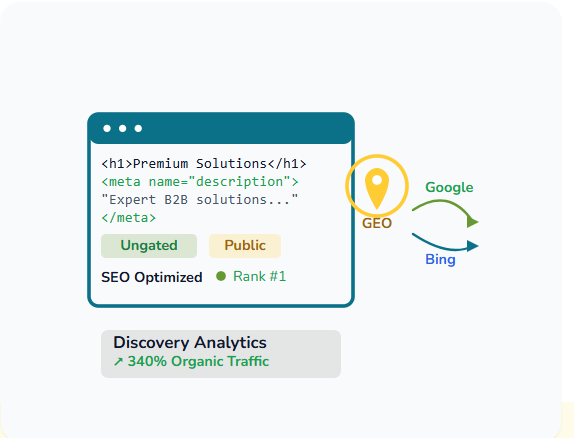
With SlateCX you can design your web content for maximum visibility. You can ungate your content so that search and AI engines give you higher rankings and more inclusion in AI answers.
Convert More Leads
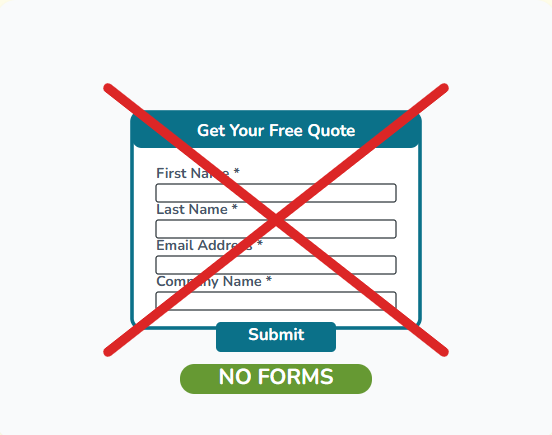
Experiment with removing forms and letting the SlateCX agent collect prospect information during the course of a natural conversation. Prospects engage more freely when they're not confronted with barriers, leading to higher quality leads and better conversion rates.
Increase Engagement
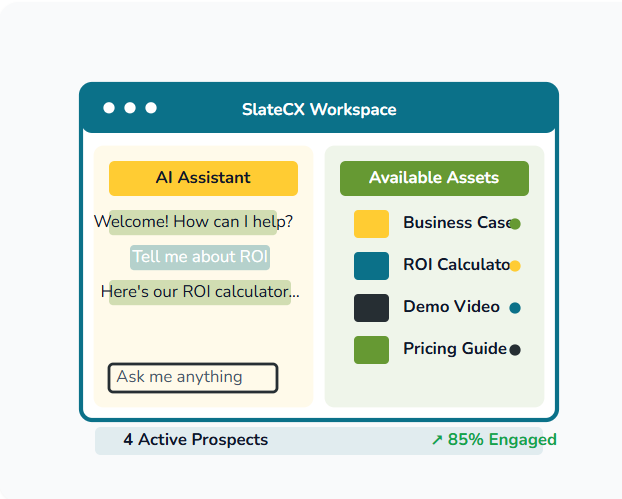
Keep prospects actively involved throughout their buyer journey. Interactive workspaces encourage exploration, team collaboration, and deeper engagement with your solutions.
Put Your Best Foot Forward
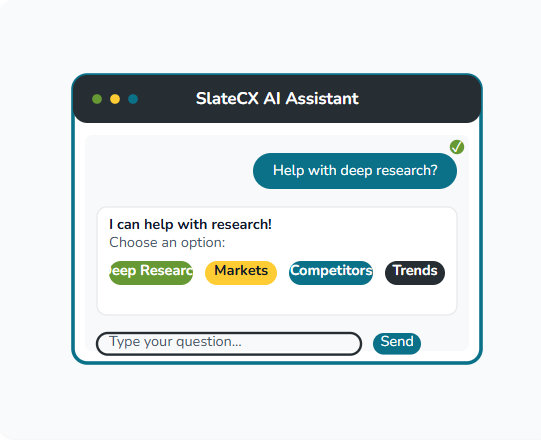
Your prospects want to do their own deep research - about solutions available to them and their strengths and weaknesses. With SlateCX they can do this while you supply the AI Agent with the most relevant information about your product and brand.
Help Your Reps Engage
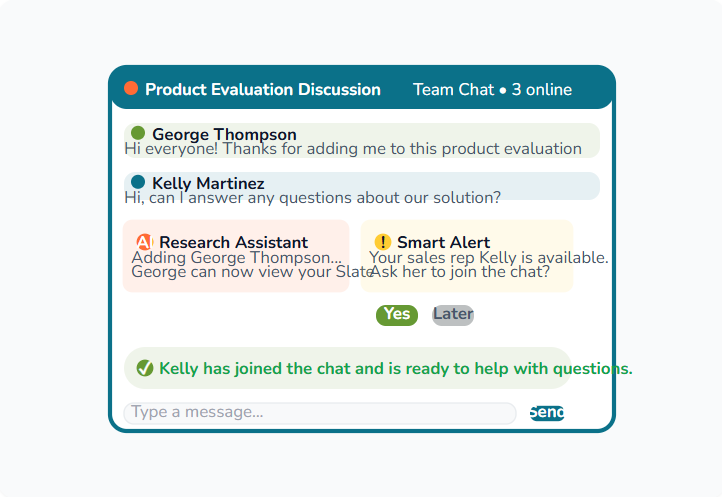
When prospects are actively engaged and ready for sales interaction, SlateCX automatically invites your sales rep to join the team chat at exactly the right moment. No more cold calls - your reps enter warm conversations with prospects who are already engaged.